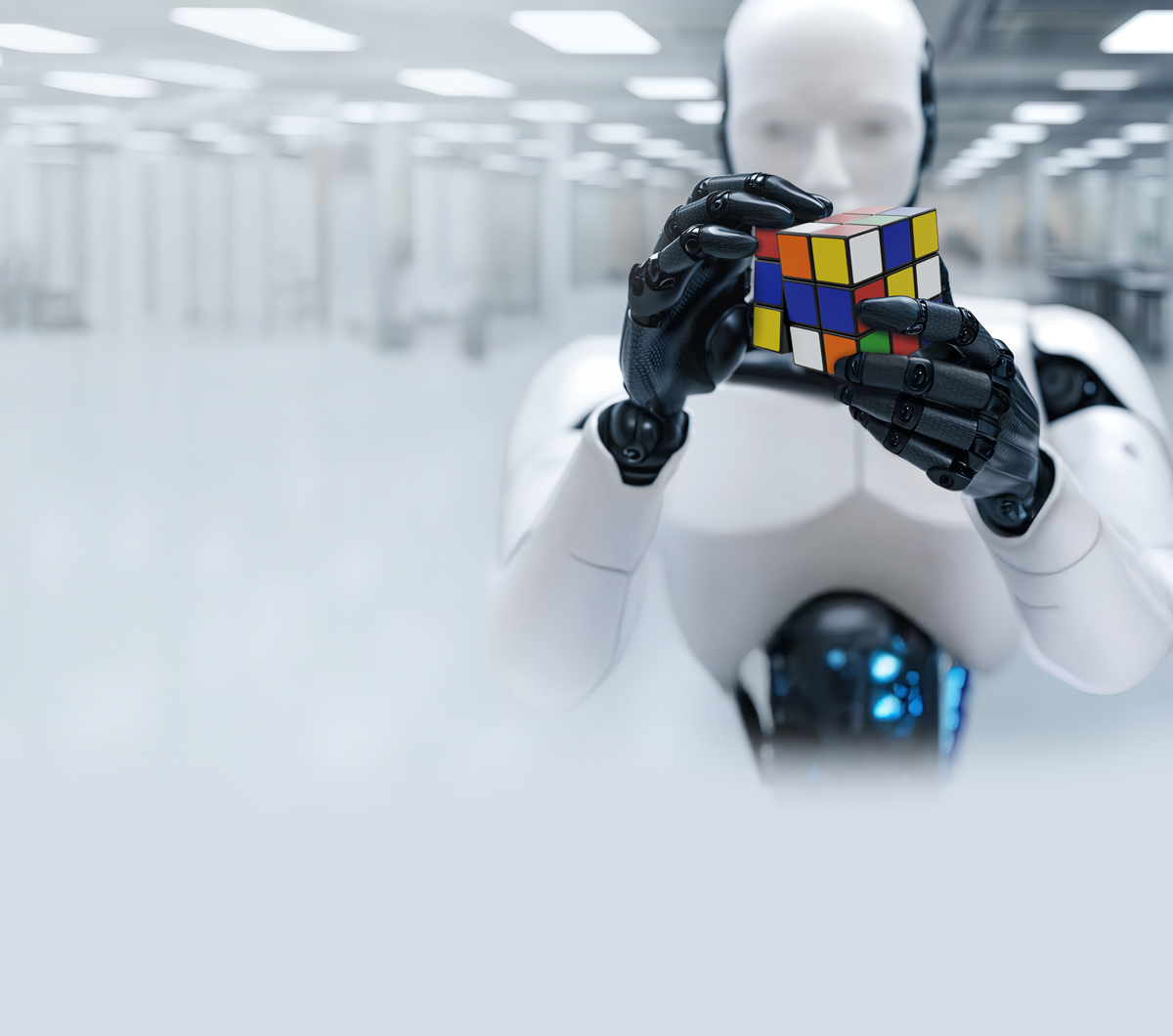
Walking on two legs is a complex matter that must be precisely controlled.
Even humans need a good year before this apparently trivial sequence of movements is
mastered and the interaction of approximately 200 muscles,
numerous complicated joints and various specialized regions of the brain functions.
Due to the unfavorable lever ratios for humanoid robots, a motor with minimal
dimensions must produce the highest possible torque in order to be able to replicate a human-like movement.
While classic robots are typically used in highly structured environments such as industrial manufacturing
or logistics, humanoid robots enter a completely new terrain: daily life.
They need to orient themselves in unstructured environments in which, e.g., no living room is
like another and every task is individual.
When in direct contact with people, they operate less abstractly but are rather physically present –
often within close proximity.
A wide range of applications for humanoid robots
Humanoid robots form the interface between artificial intelligence and the real, physical world. They are able to process not only digital information but also transform this into concrete actions. If the sequences of movements function smoothly and safely, humanoid robots can perform a number of tasks that were previously reserved for humans – be it in hazardous environments, in direct contact with people or in repetitive processes. They assist in the household, support with rehabilitation, interact with older people or are used in retail business. Their strength is in their versatility and ability to adapt to human environments.
The role of drive systems
At the core of every movement performed by a humanoid robot is a precise drive system. It decides how smoothly an arm is raised, how quickly a leg can respond or how gently a finger grips.
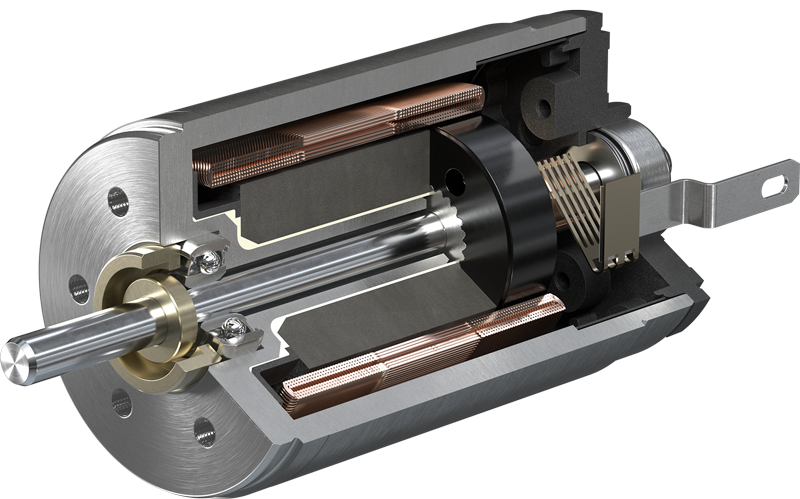
The brushless DC micro motors in the FAULHABER SXR product family feature an innovative hexagonal winding design with a high copper fill factor and a high percentage of straight windings, enabling them to achieve significantly higher power and efficiency