Industrial PC
Cincoze rugged computers built for temperatures ranging from -40 °C to 70 °C
Validation under extreme conditions
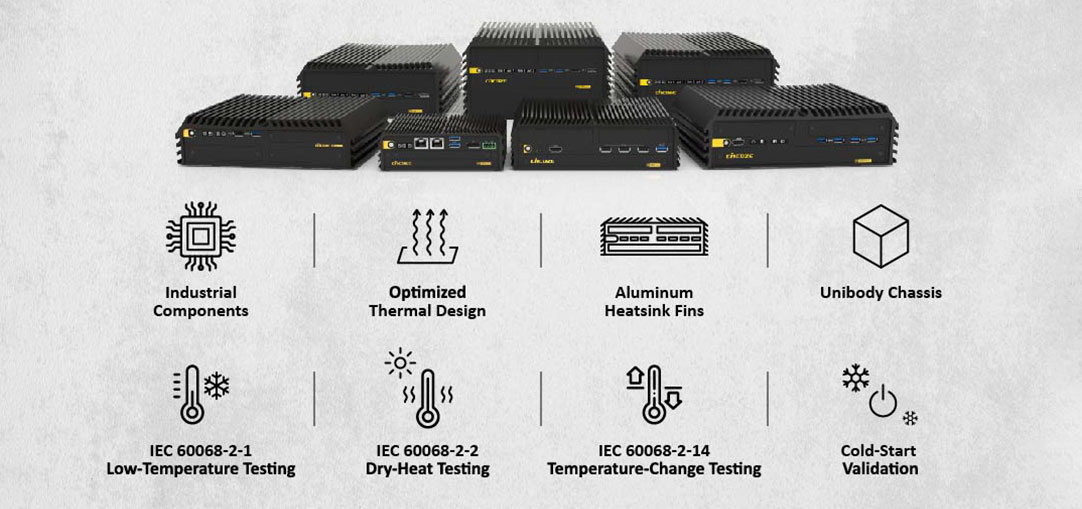
A good example of this approach is provided by rugged embedded computers specified for an extended operating temperature range of -40 to 70 °C. In addition to the use of industrial-grade components, these systems feature a thermal concept specifically adapted to their system architecture. Extruded aluminum heat sinks and an integrated enclosure design enable efficient dissipation of the heat generated by the CPU and other components.However, assessing individual components is not sufficient to provide a reliable statement about temperature resistance. Complete systems must therefore be validated according to environmental testing standards such as IEC 60068-2-1 for cold, IEC 60068-2-2 for dry heat, and IEC 60068-2-14 for temperature change.
During low-temperature testing, for example, the systems must successfully complete four cold-start tests following continuous exposure to -40 °C for 17 hours. This verifies that the industrial computer can start reliably after prolonged exposure to extreme cold and continue to operate stably.
Temperature resistance as part of overall system reliability
For industrial computers that operate continuously under changing environmental conditions, an extended operating temperature range is far more than an additional product specification. It is the result of a comprehensive system design combining suitable components, efficient thermal management, and reproducible environmental testing.Particularly in applications with high computing loads or installations that are difficult to access, a robust design can help prevent temperature-related failures and unplanned service interventions. An industrial computer designed for the specific application therefore provides the foundation for reliable 24/7 operation – even when environmental conditions are far removed from those of a typical office environment. ▪ ds