How SBC and AI
work in the overall system
The scanner contains an optical camera-based system that detects surface irregularities based on the refraction
of light. Intelligent algorithms process the camera images from three-dimensional space into usable
two-dimensional images. A number of measurements are taken, such as speed, lateral distances, height and the
shape of the vehicle, to create a blueprint of the vehicle with its shape and irregularities. The AI was
previously trained to recognize the hail-specific dents and distinguish them from other similar-looking dents –
such as those caused by water droplets. The experts classified a large number of images so that the AI could
learn to distinguish between the dents. Today, it can detect almost all types of damage.Five SBCs are installed in each scanner sheet, one for each of the five cameras connected to the camera system.
They perform each calculation independently. “This is of course a great advantage, because we can run everything in parallel, which saves a huge amount of time,” says the managing director. A further, sixth computer acts as an interface computer, coordinating communication within the system to control the individual SBCs and issue instructions. It ensures that everything is started, stopped, recorded, analyzed and evaluated at the right time. It also bundles the information and handles communication with the operating laptop or other connected computers to forward the scanner output.
The benefits of a local solution
“The AI is of course constantly being trained and improved, also based on different conditions. Hail always varies from region to region. This results in different dent shapes and intensities,” says the hail expert. Dents also look different on plastic parts. This ability to detect dents also means that fraud can be prevented: Blankenheim knows that hail events are often the subject of insurance fraud. But the scanner also detects dents made by car owners themselves.“ So if there are hundreds of dents on the roof and the scanner only detects twenty, then it gets exciting,” says Tino Blankenheim with a smile.Data privacy guaranteed
The company deliberately opted for the SBCs rather than a cloud solution because the scanner should be able to work offline in places with poor Wi-Fi, such as an underground car park, and calculate the result locally.Appropriate interfaces are used to import and export data. “This is an advantage for us in terms of data protection, as each customer keeps their data exclusively for themselves. It has also made it much easier for us to further develop the system from an IT security point of view,” concludes Tino Blankenheim.
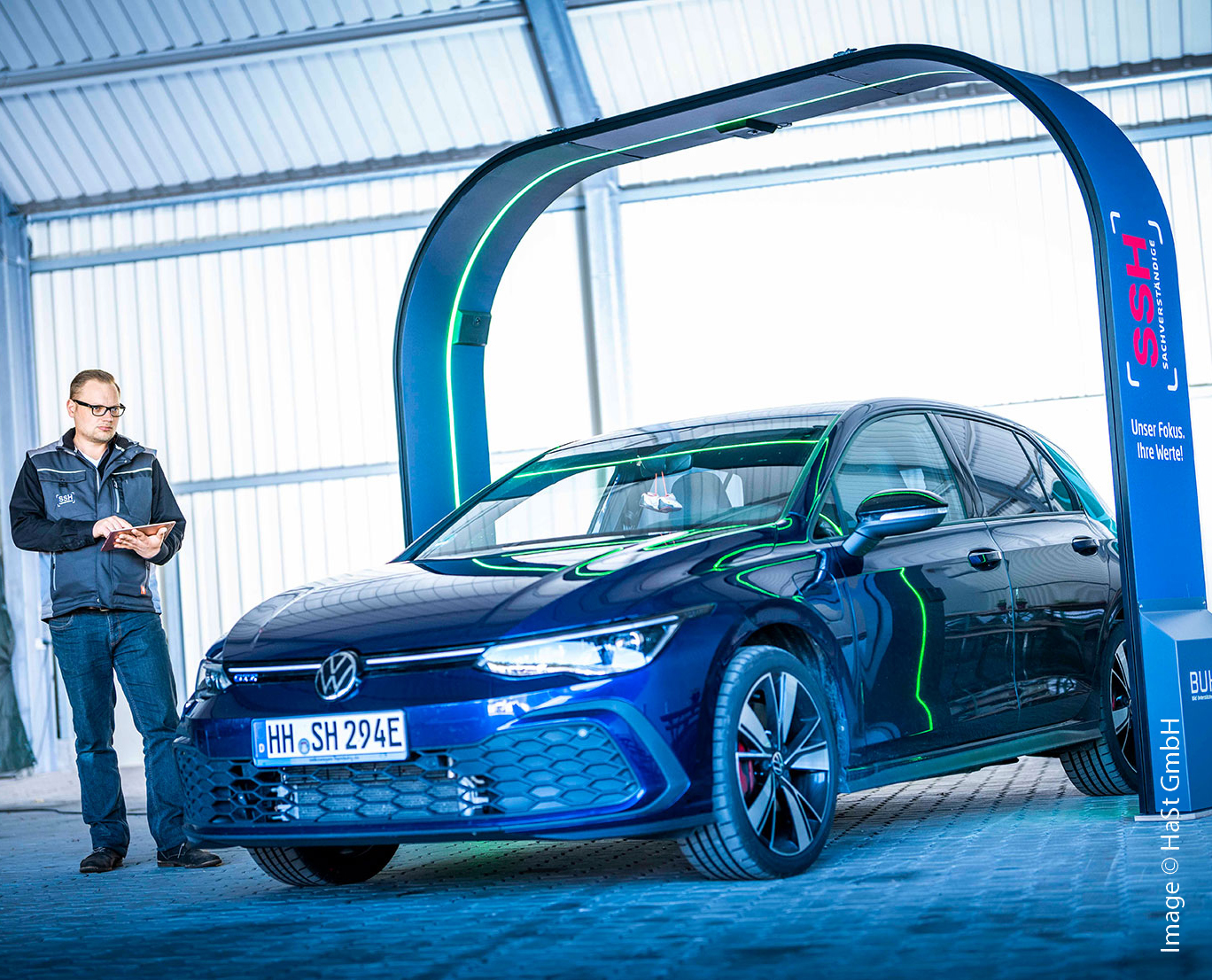
Measuring process in the scanner sheet
In addition, the approximately 40 Gigabyte of data processed per vehicle do not have to be transmitted. The compression required for this would lead to a loss of quality, which the hail specialists are not prepared to accept.
The company will continue to focus on optimization in the future. They are currently working on a scanner for caravans - and, of course, on further internationalization, as the hail problem is becoming increasingly important worldwide.
 HAST hail scanner