All-QLC Flash Storage for Clusters with 10,000 GPUs
KAYTUS' QLC Flash Solution: High Performance in Agent-Based AI with Operating Costs Reduced by up to 70 Percent
KAYTUS, a leading provider of liquid-cooled AI infrastructure solutions, is introducing its all-QLC flash storage solution (QLC = Quad Level Cell) designed for high computing power, massive scalability, and cost efficiency in clusters of 10,000 GPUs. The solution addresses data-delivery bottlenecks in ultra-large-scale AI training, helping maximize GPU resource utilization.
Artificial Intelligence
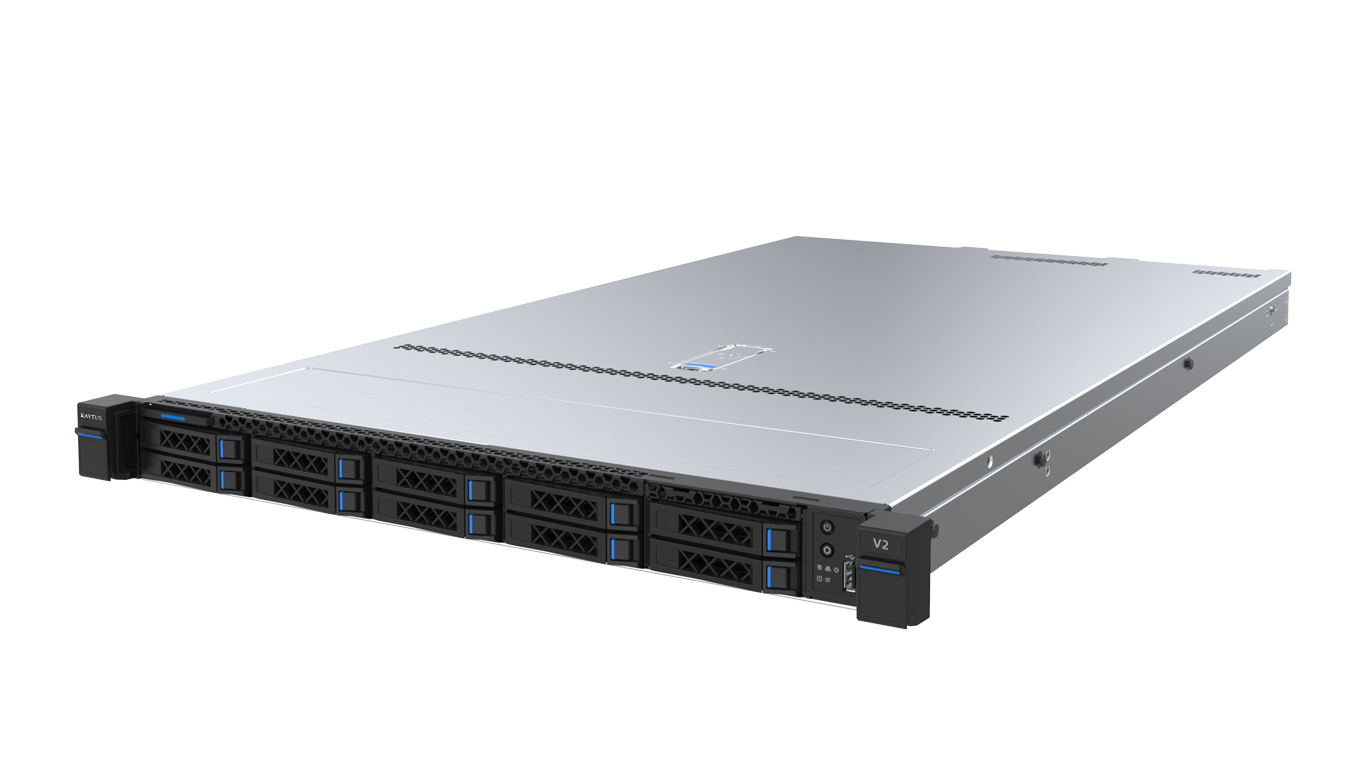
Based on the KR2280 and KR1180 server platforms, the solution is deeply integrated with
industry-leading AI-native parallel file systems to eliminate data silos inherent in traditional tiered storage.
Purpose-built for read-intensive AI workloads, it overcomes the horizontal scaling
limitations of massive clusters. Verified test-data shows that, at exabyte-scale deployment,
the solution delivers 10 TB/s aggregate bandwidth and 100 million
IOPS (IOPS = Input/Output Operations Per Second).
In addition, it reduces five-year TCO by 70 percent compared with traditional TLC-based solutions (TLC = Triple Level Cell), accelerating model innovation for AI cloud providers and intelligent computing centers.
Limitations in Traditional AI Storage Architectures
The explosive growth of AI is fundamentally transforming enterprise computing and storage requirements.
Large-scale AI model training features highly read-intensive workloads that require tens
of thousands of GPUs to concurrently access exabyte-scale datasets with sub-millisecond latency.
Traditional storage architectures now face three major challenges.
Separated Data Silos
Traditional ETL processes require data to be moved from object storage to parallel
file systems before training, resulting in time-consuming physical data migration.
IDC research indicates that data teams spend 81 percent of their time on data preparation,
slowing business iteration.
Workload and Media Mismatch
More than 90 percent of AI training involves high-frequency concurrent reads.
In contrast, traditional TLC flash solutions provide excessive write endurance
that is unnecessary for these read-intensive workloads, driving up procurement, space,
and power costs for exabyte-scale clusters and resulting in inefficient resource utilization.
Scalability Bottlenecks
Traditional file systems were not designed to handle the I/O burst workloads generated
by 10,000-GPU clusters.
As clusters scale, metadata lock contention and communication overhead introduce latency spikes and degraded overall performance.
KAYTUS All-QLC Flash Storage for Delivering High Performance, Scalability, and Cost Efficiency
The next-generation KAYTUS All- QLC Flash Storage Server Solution is purpose-built to unlock the full
potential of read-intensive AI training workloads.