Learning instead of rules:
How TIV works
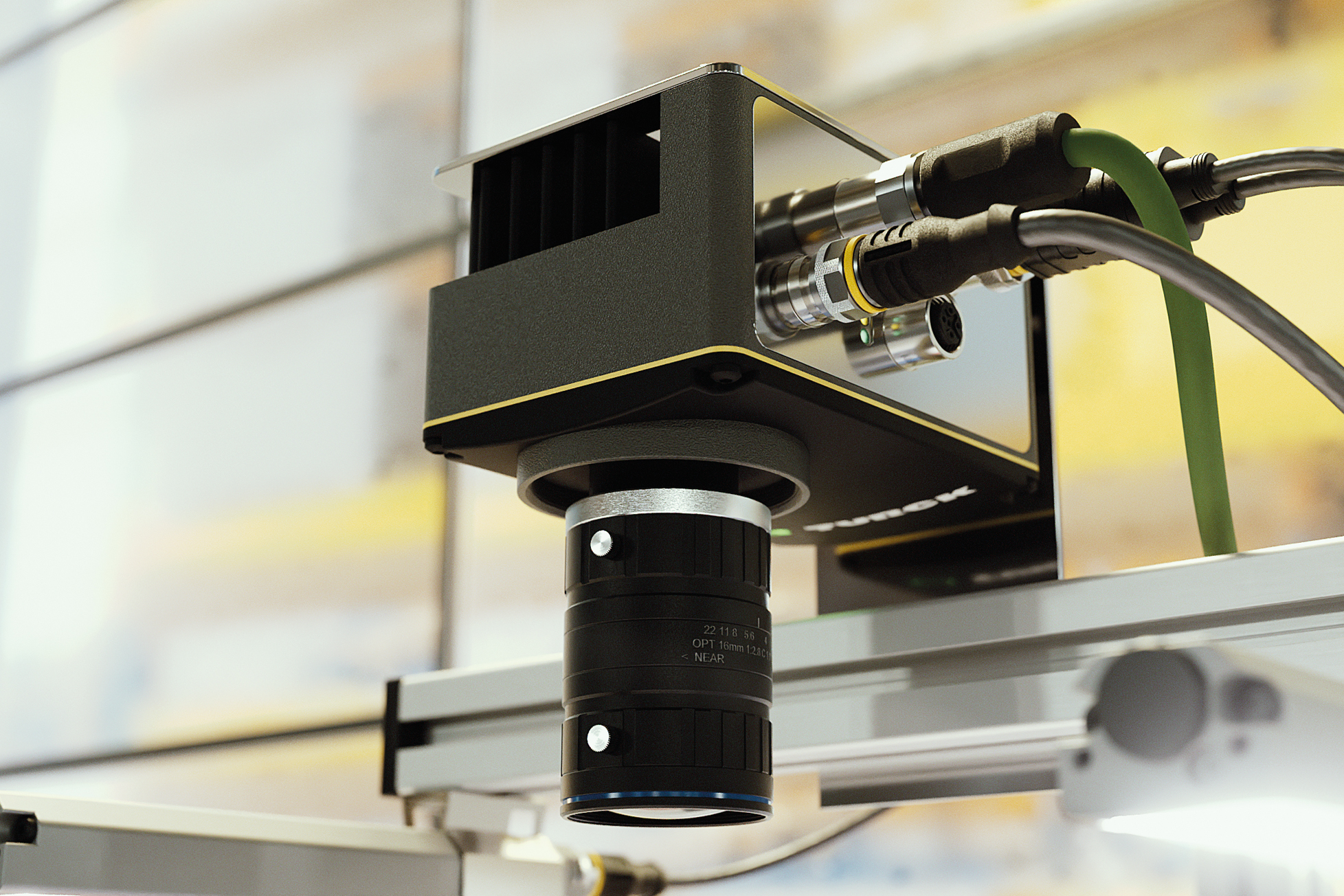
Instead of coding rigid instructions, TURCK's AI camera TIV learns from sample images. It independently
recognizes patterns and differences and transfers what it has learned to new situations. Just a few images are
enough to reliably distinguish between good and bad conditions or classes. Adjustments to products or test
characteristics are made via retraining – without expert knowledge. This reduces false alarms and makes tests
reliable, even with minimal visual differences.
A key advantage: process knowledge remains with the user. The production department defines what is "good" or
"bad" – the camera learns the difference. This dramatically shortens commissioning time. While complex,
rule-based solutions often take weeks, a completeness check can be set up in a short time with the TIV.
Four vision apps
for all core tasks
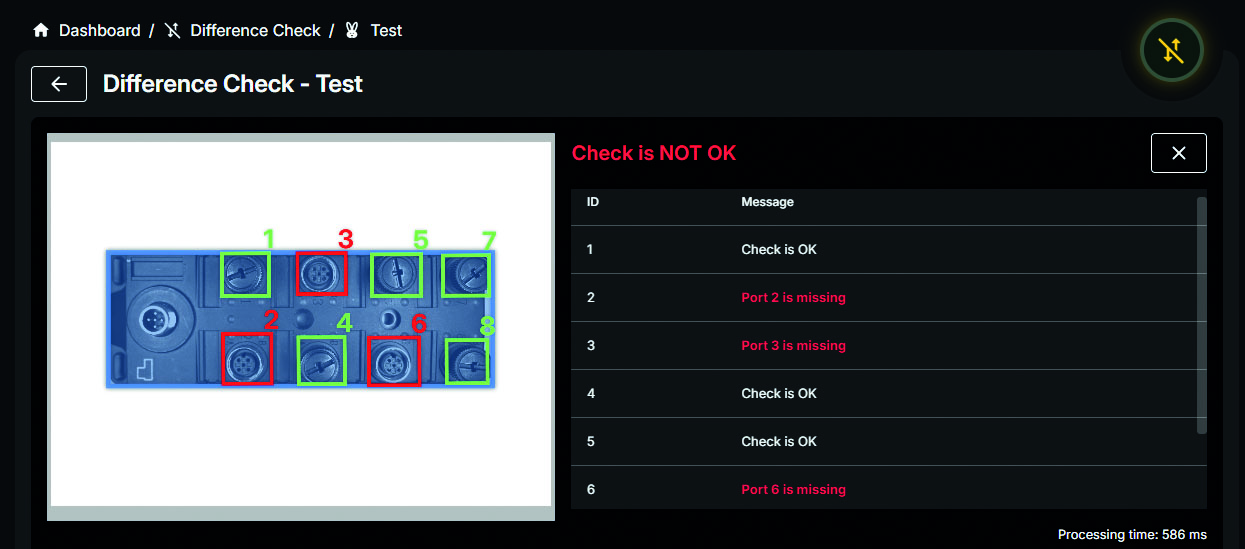
The TIV camera performs key industrial image processing tasks with four integrated AI apps. “Difference Check”
performs precise target/actual comparisons and evaluates individual test areas separately – even for complex or
varying objects. With “Classifier”, complete images can be assigned to predefined classes, which significantly
simplifies sorting and classification processes. “Detector” identifies and classifies multiple objects
simultaneously, determines their position and orientation, and also provides a confidence score for evaluation.
“Code Scan” reliably reads 1D and 2D barcodes and recognizes their type, orientation, and position. Combined
with “Detector” codes on specific objects can be read in a targeted manner.
All results are PLC-compatible – from simple IO/NIO signals to structured data packets for further processing.
Training is carried out with just a few sample images using, and adjustments can be integrated at any time
through retraining. This keeps the camera flexible and future-proof.
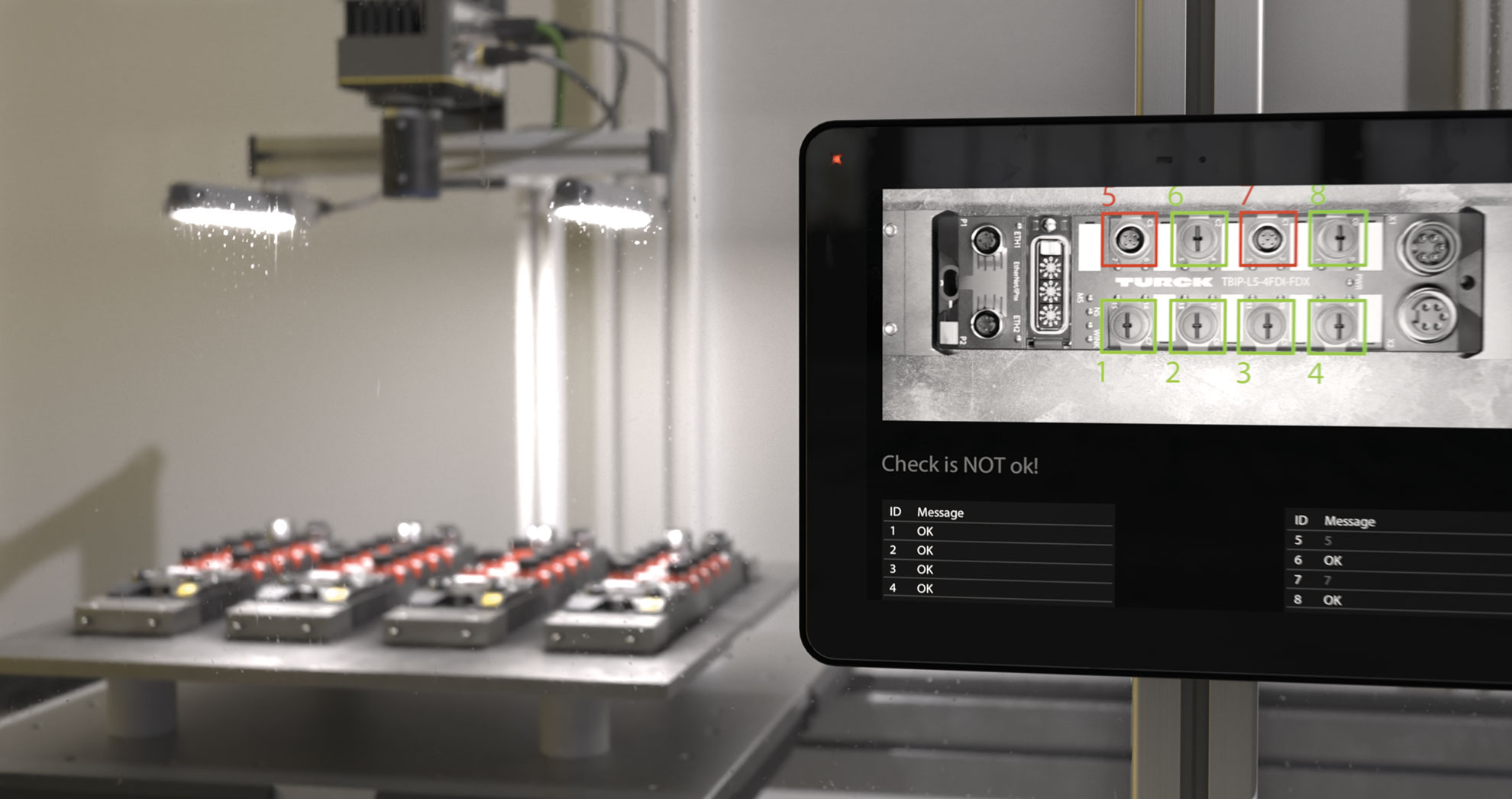
The AI camera independently recognizes even the smallest differences or visually similar components – regardless of position or arrangement
The Difference Check detects errors in assembly and placement processes